
Tragic events like those felt by residents of Northern Ontario during the recent wildfires are often closer to home than we think. For several days, smoke and haze reached cottage country and southern Ontario, a small reminder of what northern communities were experiencing firsthand at a much greater scale.
One of AOA’s own, Glacier Ski Club coach and ACA coach course conductor Chris Wiwchar, is a long-time water bomber pilot for the Ontario Ministry of Natural Resources. His work, often in the earliest, most chaotic days of a large wildfire, is invaluable and gives him a firsthand view of the devastation these fires cause. No doubt there are many other AOA skiers out on fire crews across the province, a reminder that our ski community reaches every corner of Ontario, including the places hit hardest by what’s happening up north.
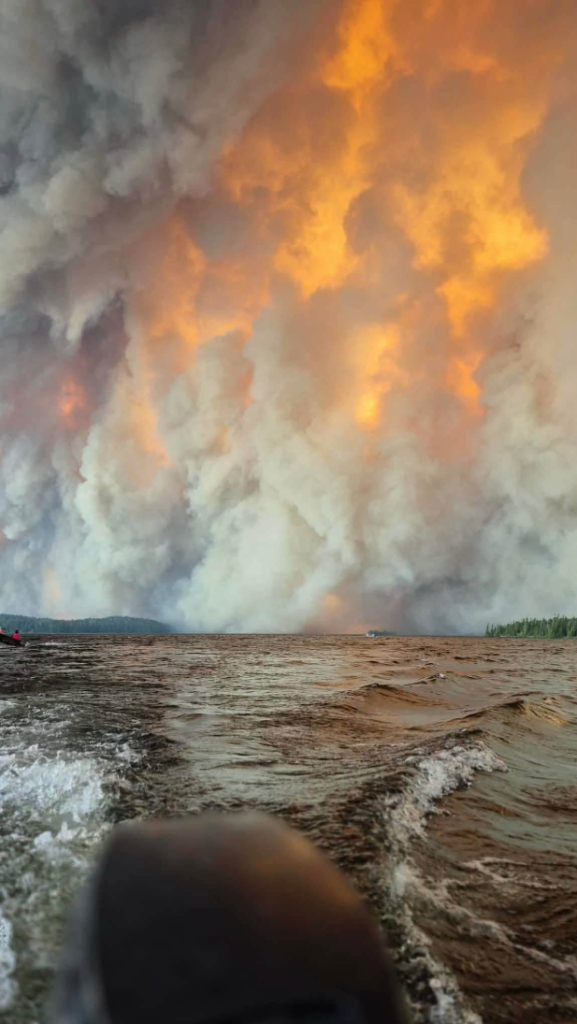
One of those communities is Namaygoosisagigun First Nation, also known as Collins, located west of Armstrong along the CN rail line. In mid-July, a wildfire moved through so fast it destroyed most of the community in under an hour. Families escaped by small boat, crossing the lake as their homes burned behind them. Everyone made it out safely, but there is very little left to go back to. CBC News has the full story.
Stephanie Paavola is a Collins community member whose family home was destroyed in the fire. Stephanie, who once worked for Outland under Dave Bradley, has been very open about her ordeal from the start, helping people understand the impact the wildfires are having on her family and community.
Stephanie recently shared, “I haven’t been able to pray since the fire took our homes, because that day I’d begged God. When I went to see the remnants of our community, it didn’t look the same, but it still felt like home. I swam in the lake with my sisters at the spot where our mom’s house once stood and felt a little bit of hope that day. Yesterday, one of our community members was reunited with her dog, who everyone thought was lost to the fire. He survived on his own for a month before he was found and brought home. My heart is so happy they’re together again. Right now I feel okay and at peace. Everyone made it out alive, and we are all going home, with or without help. We’ve always done everything on our own, so what’s the difference now.“
Stephanie’s community is trying to rebuild from almost nothing. The Anishinabek Nation, which represents 39 First Nations across Ontario, is now leading the fundraising effort through the Anishinabek Nation 7th Generation Charity (see below).
Dave Bradley, LSDA Board Chair and AOA Board of Directors member, is also closely tied to the fire response, coordinating Indigenous firefighting crews for Outland, a supplier of fire crews to the MNR. Dave points out that the Thunder Bay community continues to support many of those affected with accommodations, meals, programming, and other services.”Many folks in our ski club communities up here in the north know these towns, these families, these rail lines, and are involved in the emergency response in one way or another,” says Dave. “When one community is hurting, the whole region feels it. This is exactly the kind of moment where we should be looking out for our neighbours.”
Recovery will take years, but these northern communities are already finding their way back. Your support can help make that road shorter. There are several ways to support Indigenous and non-Indigenous communities affected:
- Online: redcross.ca – give.redcross.ca/page/24CWFA
- Via CanadaHelps: canadahelps.org; search “Canadian Red Cross Society” and select the Canadian Wildfire Fund campaign
- Anishinabek Nation 7th Generation Charity: an7gc.ca/donate
Photo Credit: Lyndon Tyler